

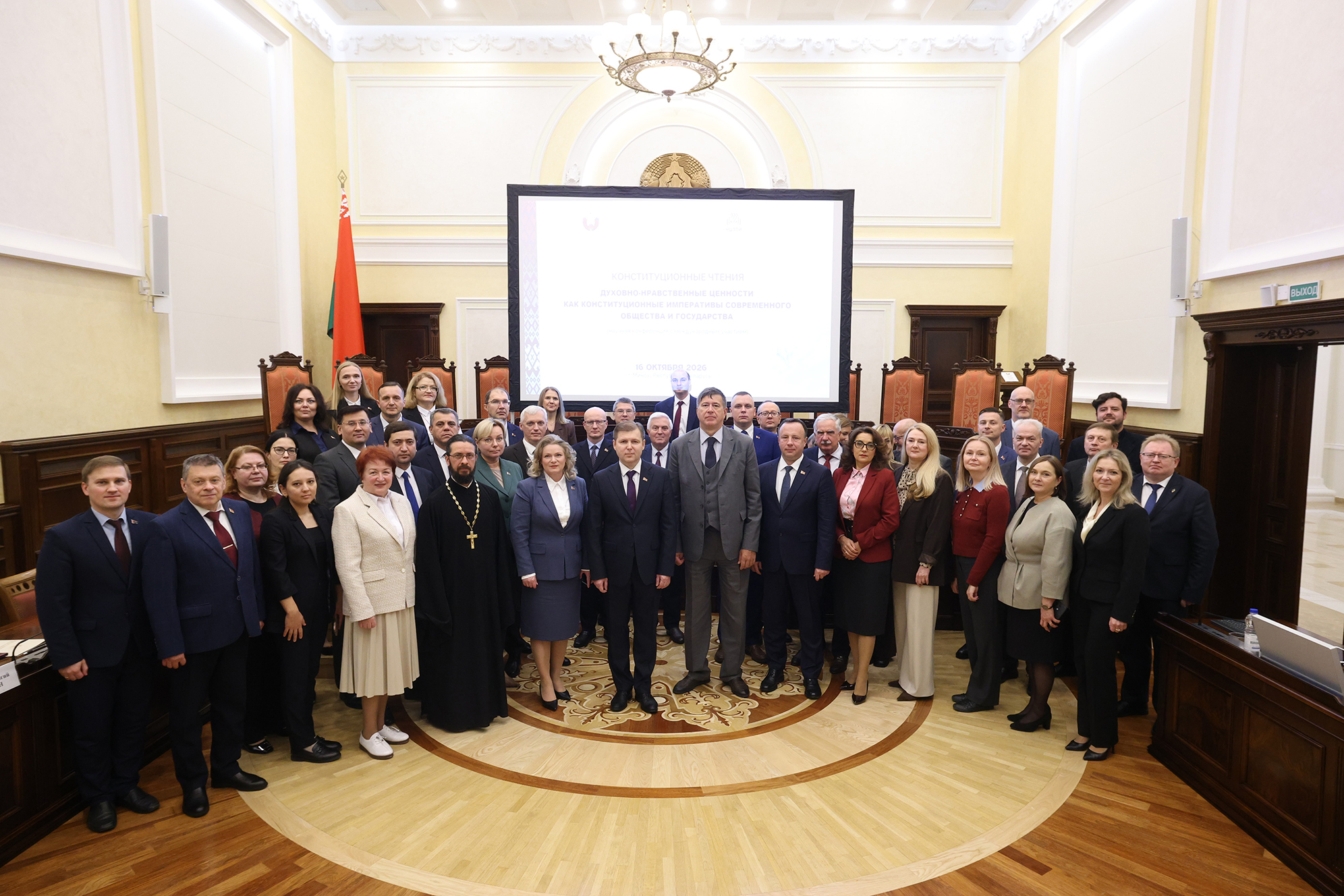
This point was emphasised by the Chairman of the Constitutional Court while welcoming participants to the Constitutional Readings, held today in Minsk for the first time.
The event was organised under the auspices of the Constitutional Court and the National Center of Legislation and Legal Information as part of the 8th Autumn Scientific Session and brought together heads of the highest government authorities, judges, prominent legal scholars, historians and sociologists from Belarus, Russia and Uzbekistan, as well as representatives of the clergy.
Opening remarks were delivered by Siarhei Sivets, Chairman of the Constitutional Court of the Republic of Belarus, and Andrei Matelsky, Director of the National Center of Legislation and Legal Information of the Republic of Belarus. Among the distinguished guests and participants was Aleksandr Konovalov, Deputy Chairman of the Constitutional Court of the Russian Federation.
The topic of this high-level academic conference was “Spiritual and Moral Values as Constitutional Imperatives of Modern Society and the State”. In his plenary report Siarhei Sivets noted that the country’s updated Basic Law enshrines the fundamental values of the Belarusian people.
“Spiritual and moral values form the axiological core of the Constitution; they define our constitutional identity and serve as a robust shield against external ideological interference. These are not merely moral categories, but constitutional imperatives upon which the state’s entire legal and social policy is built”, Siarhei Sivets emphasized.
According to him, the protection of historical memory and the institution of the traditional family, along with the advancement of the principles of social justice and humanism, currently stand as priority areas for the Constitutional Court’s work.
The Constitutional Readings covered a wide range of issues, from the protection of marriage and motherhood to the challenges posed by digital transformation and the development of artificial intelligence.
Addressing the impact of digitalisation on society, Aleksandr Konovalov, Deputy Chairman of the Constitutional Court of the Russian Federation, emphasised:
“Any new technology or form of artificial intelligence is merely a tool. It is crucial not to cross the line where machines begin to do the thinking for human beings. When it comes to defending against external informational and ideological pressure, the most important thing is to remain true to our core essence. Our national, cultural, and conceptual identity enshrined in our constitutions serves as a foundation that renders us resilient against any external challenges”.
Participants in the forum underscored the importance of fostering constitutional patriotism and a legal culture rooted in national traditions. It was noted that, amidst global turbulence, remaining faithful to one’s spiritual roots is what enables the preservation of a stable, democratic legal order.
Latest news
-
On 22 October 2026 the Constitutional Court initiated proceedings regarding the constitutionality of Article 14 of the Civil Code of the Republic of Belarus on the individual complaint of D.I. Khmelevsky
22 October 2026

-
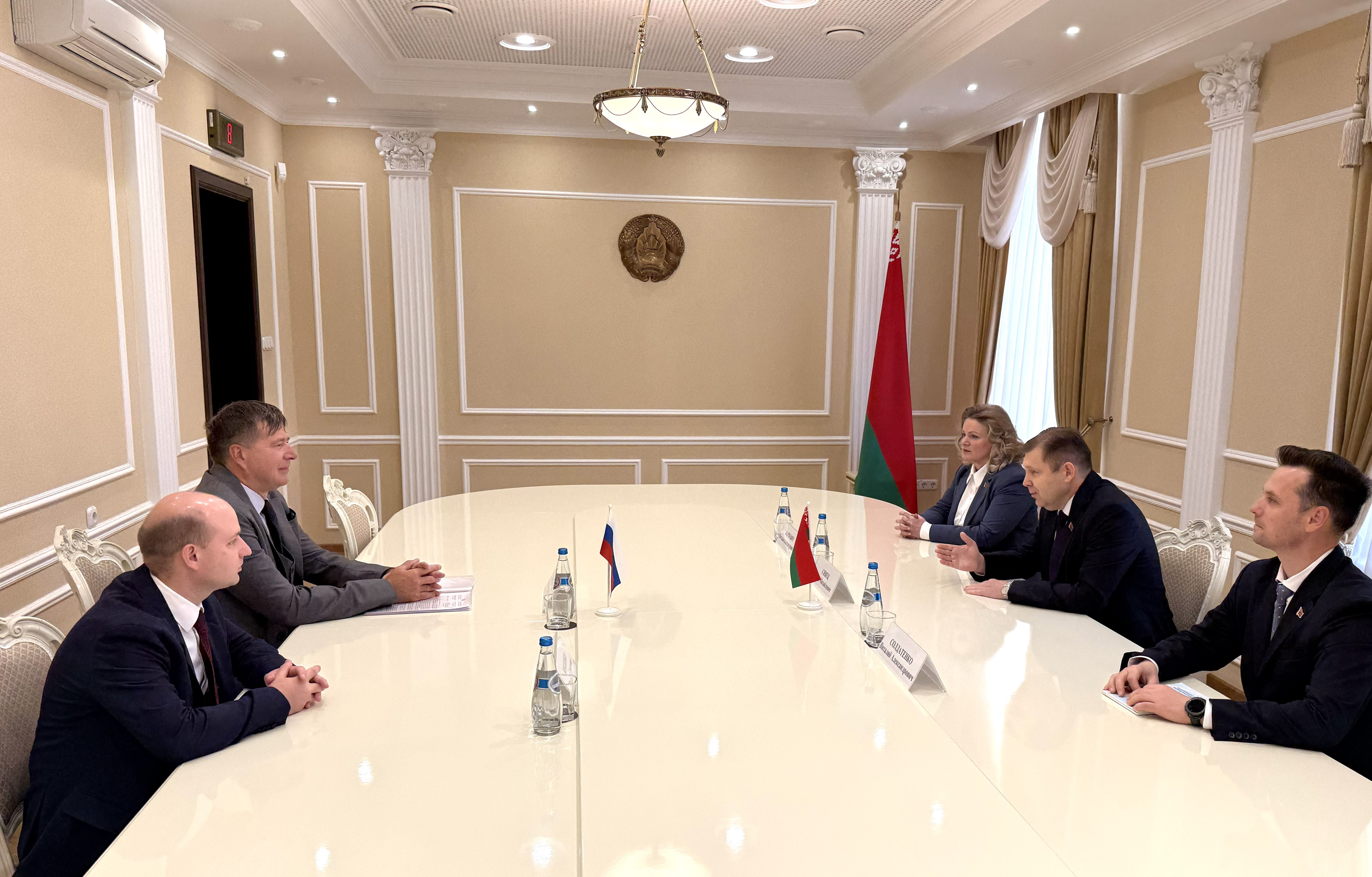
Siarhei Sivets met with Aleksandr Konovalov, Deputy Chairman of the Constitutional Court of the Russian Federation
16 October 2026
-
Spiritual and Moral Values: The Core of Belarus’s Constitutional Identity and Sovereignty
16 October 2026
-
The Constitutional Court has refused to initiate proceedings regarding the constitutionality of Articles 3 and 15 of the Law of the Republic of Belarus “On the Fundamentals of Administrative Procedures” (Ruling of the Constitutional Court of 9 October 2026)
9 October 2026